





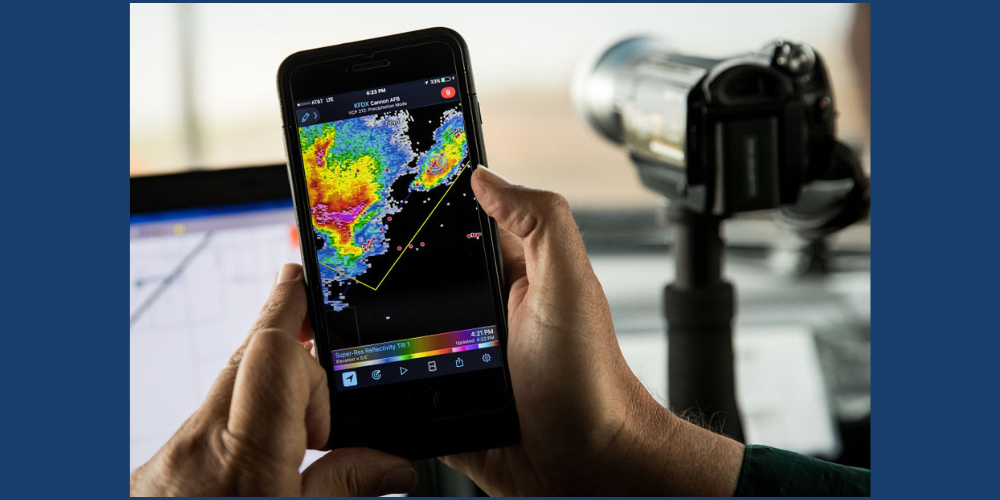
MILWAUKEE — When a tornado warning pops up on your phone, most people head for the basement. A select few head for their cars — and drive straight toward the storm. But not all of them are doing the same job. Storm chasers and storm spotters are often talked about in the same breath, but they serve distinct roles in Wisconsin’s severe weather network — and understanding the difference matters more than you might think.
Same Goal, Different Methods
At the most basic level, both chasers and spotters do something no radar can fully replicate: they put human eyes on a storm in real time.
“Both a storm chaser and a storm spotter are eyes on the storm that meteorologists like myself, that could be sitting in a studio, or National Weather Service meteorologists that are in their office — they’re actual eyes on a storm that can give confirmation of something actually happening,” said Brian Niznanski, meteorologist at TMJ4.
But the similarities start to diverge pretty quickly from there. Storm spotters are trained volunteers who operate close to home — typically within 10 to 20 miles — and report what they observe directly to the National Weather Service and local media. That training, offered through the National Weather Service, is what makes the spotter designation official.
“The biggest differentiator is a storm spotter is going to go through storm spotter training that is through the National Weather Service,” Niznanski said. “That storm spotter label is specific to that.”
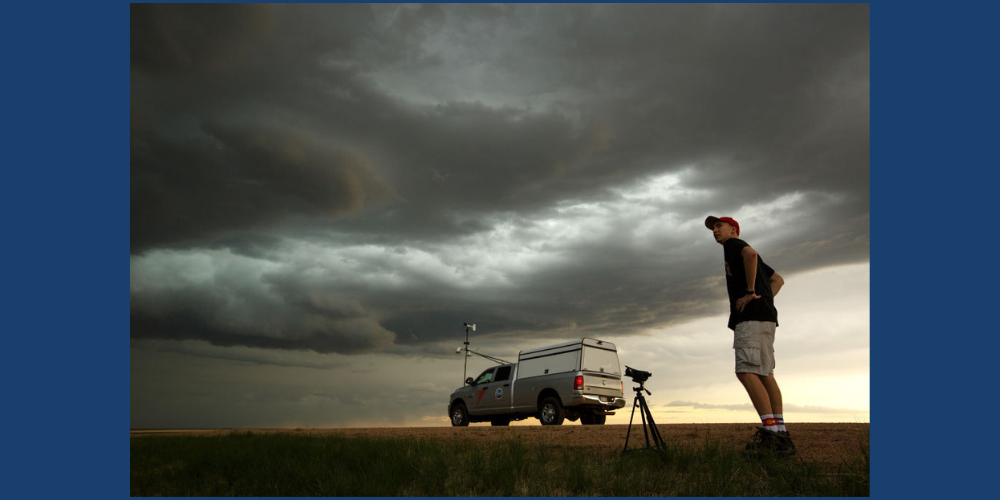
Storm chasers, by contrast, tend to roam. Scott Weberpal is an independent storm chaser from Wisconsin with more than two decades of experience. He’s logged thousands of miles across the Great Plains chasing supercells — and he draws a clear line between what spotters and chasers typically prioritize.
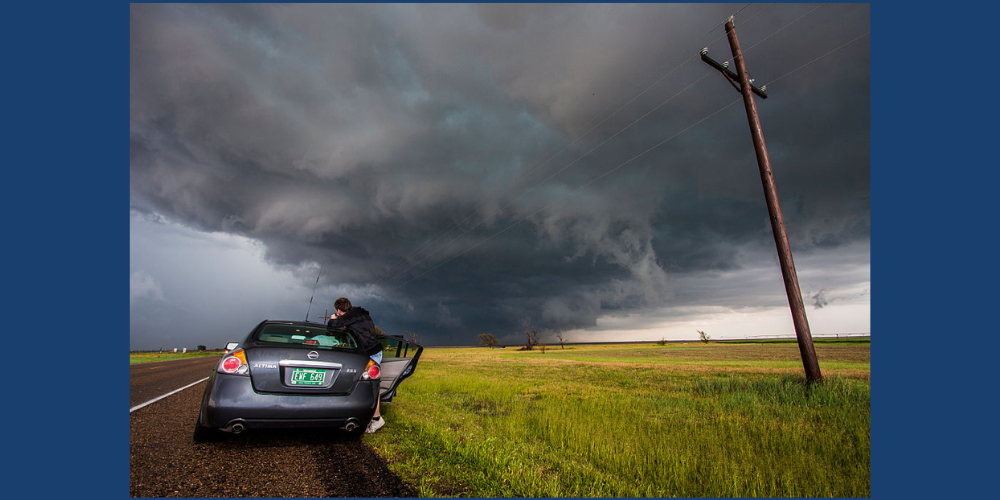
“Spotters are generally folks who will stay within a specific radius of home and will simply report to the National Weather Service, local TV stations, what the weather is at their specific location and just kind of give some ground verification,” Weberpal said. “Storm chasers are more focused on finding, getting pretty pictures, video of the storm — and not necessarily more focused on the reporting and ground truth verification.”
When Radar Isn’t Enough
Modern radar technology is remarkable — but it has blind spots. The curvature of the earth means that the farther a radar station is from a storm, the higher up in the atmosphere it’s scanning. Near-ground activity can go undetected.
That’s where a human on the ground becomes irreplaceable.
“It makes it a lot easier to confirm a tornado if you have definite eyes on it,” Niznanski said. “But if no one saw it and you just have a bunch of tree damage, sometimes it can be difficult to say this was a tornado or it wasn’t.”
Niznanski also points out that the value cuts both ways. A spotter or chaser reporting that nothing is on the ground is just as important as a confirmation.
“If that tornado isn’t touching down, that’s just as valuable too,” he said, “because one of the last things we like to do is give the same weight to a tornado warning when you have a scenario where there might be a tornado — versus, oh my goodness, there is a tornado on the ground and it’s heading for Fort Atkinson.”
The Risks Are Real
Storm chasing looks thrilling on social media. The reality is more complicated.
Weberpal knows firsthand how quickly a chase can go wrong. On August 18th, 2005 — the same day an EF-3 tornado tore through Stoughton — he found himself driving south on Highway 12, trying to get ahead of a storm near the old Badger Ammunition Plant. Without reliable radar data in that area, he made a split-second decision to push south into clearer air.
It nearly cost him.
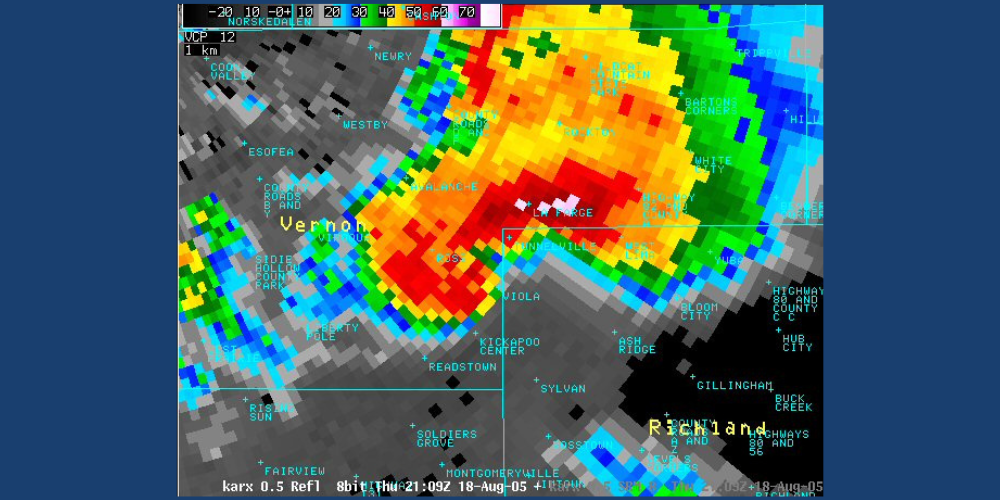
“I inadvertently drove almost right into the tornado itself,” Weberpal said. “Probably got into some 90 to 100 mile an hour winds on the northern periphery of the tornado.”
He made it out. But the experience reinforced something he carries with him on every chase.
“I’m 45 years old, I’ve got three kids, I’ve got a wife,” he said. “And so I’ve got to keep those things in my mind and tell myself that this is kind of my limit right here.”
Want to Become a Storm Spotter?
You don’t have to be a meteorologist — or particularly fearless — to contribute to Wisconsin’s severe weather network. Storm spotter training sessions are being held across southeastern Wisconsin over the next several weeks, open to anyone with reliable transportation and a genuine interest in weather.
For dates, locations, and registration information, visit the National Weather Service.