

Some stories survive because they’re true.
Others survive because they’re simply too much fun to forget.
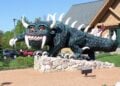
That may be the best way to describe the Hodag—a legendary creature connected to Rhinelander and one of Wisconsin’s most recognizable pieces of folklore.
Associate teaching professor in Marquette University’s English department Tyler Farrell, says the story dates back to the late 1800s.
A man named Eugene Shepherd claimed he had captured a creature with long horns, claws and spikes down its back. He reportedly said he cornered it in a cave, and the story attracted attention from people who wanted to see the mysterious animal for themselves.
“The Hodag is this fictional animal that was actually ended up being a hoax,” Farrell says.
The story eventually attracted the attention of the Smithsonian Institution. Farrell says Shepherd ultimately admitted he had made it up.
That could have been the end of the Hodag.
Instead, the story became part of Wisconsin’s identity.
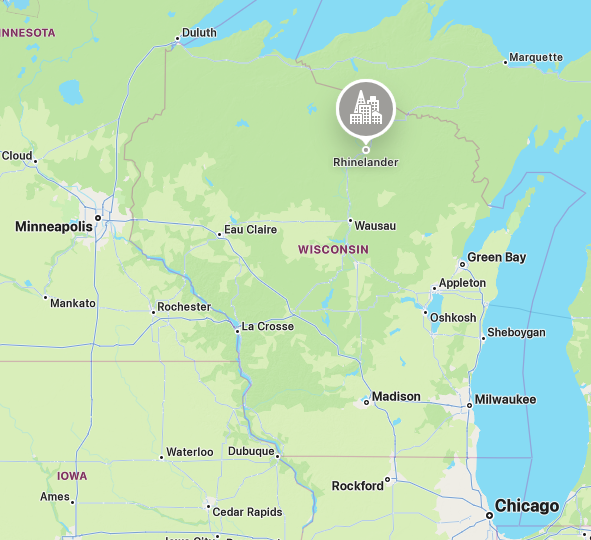
The Hodag still appears in Rhinelander folklore, including through a statue and an annual celebration. Farrell says the story continues to work because it is strange enough to make people wonder—and memorable enough to keep passing along.
“The strangeness of the story, the uniqueness of the story, the almost the fact that it doesn’t even seem real, people do want to believe,” Farrell says.
That doesn’t necessarily mean people believe the Hodag is real. Sometimes, the story itself is enough.
Farrell says people enjoy having something unusual to claim as their own.
“We kind of want something to believe in,” he says. “And even if it is kind of out there, it seems to be something that gives them, you know, meaning in their lives.”
That instinct goes beyond the Hodag.
Across Wisconsin and the Great Lakes, stories have grown around remote islands, dark forests and unfamiliar sounds coming off the water. Farrell points to Devil’s Island in the Apostle Islands, where crashing water has been described as making ghostly noises.
The stories may change over time, but the tradition of telling them goes back generations.
“Stories were passed down,” Farrell says. “This goes back in history for many, many years.”
Farrell says Halloween fits naturally into that tradition. As the days get shorter and the nights get darker, people tell stories about ghosts, spirits and the things they cannot quite explain.
The stories give us a chance to be frightened—but also a chance to return safely to reality.
The stories don’t have to be true to matter. They give people a reason to gather, wonder and pass something along.
The Hodag may have started with a hoax. But the crowds, the laughter and the story that followed were real.
More than a century later, Wisconsin is still telling it.
Fancy a trip to Rheinlander to visit the Hodag? Click here for more information.