
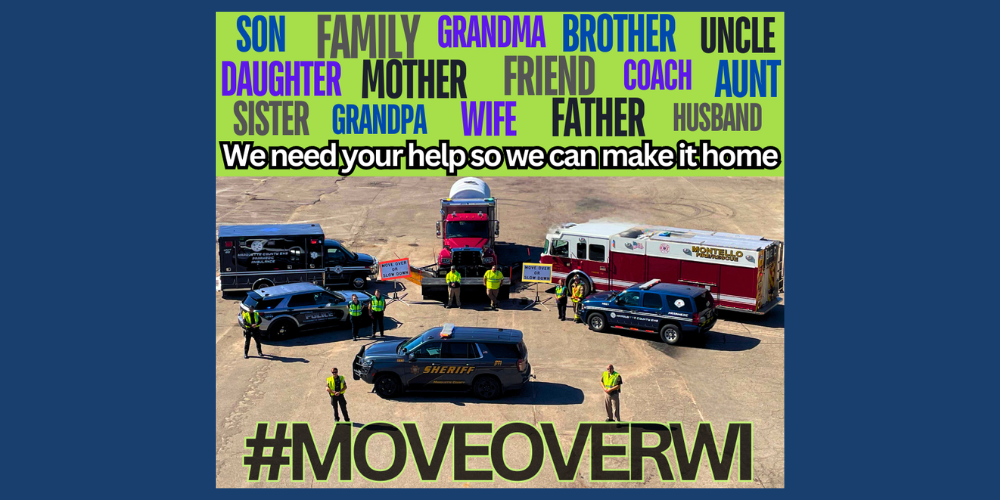
National Move Over Day is October 17. Wisconsin State Patrol troopers are increasing enforcement and education efforts statewide this week.
MILWAUKEE — By the time drivers see flashing lights on the shoulder, they may have only a few seconds to react.
National Move Over Day is Saturday, October 17, and Wisconsin State Patrol troopers are placing extra emphasis this week on enforcement and education across the state. Troopers are also handing out informational flyers to drivers stopped for violating the law.
Wisconsin State Patrol Superintendent Tim Carnahan says roadside stops can become dangerous quickly.
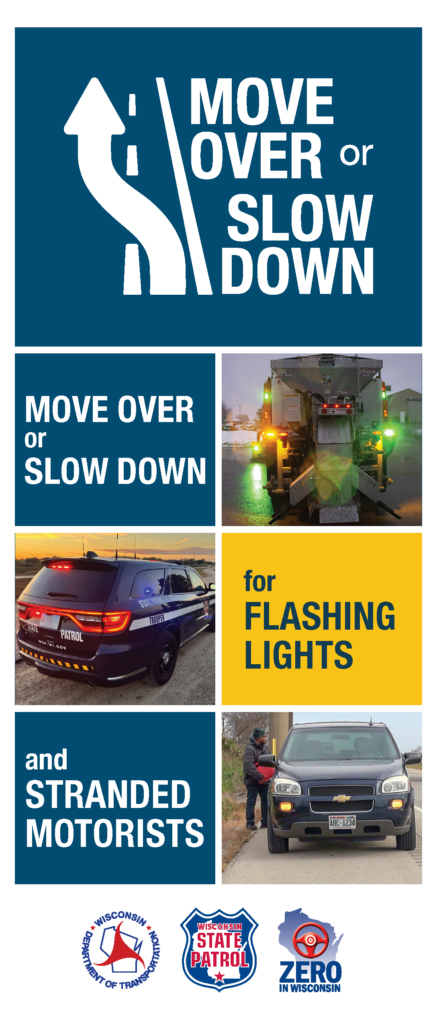
“Stopping alongside the road can be very dangerous, especially when drivers are distracted, speeding or driving recklessly,” Carnahan says. “Our officers will be working to educate motorists about the law and remind them that moving over or slowing down can protect the lives of emergency responders and stranded motorists.”
Over the past five years, 128 people in Wisconsin have been injured while inside or near a stopped vehicle along the road. Six people have been killed.
Lieutenant Erica Ballweg-Larsen with the State Patrol says the people involved in those roadside incidents can face serious danger from passing traffic.
“We want motorists just to kind of think about those people and that potentially their lives could be at risk when they’re traveling by at highway speeds,” Ballweg-Larsen says.
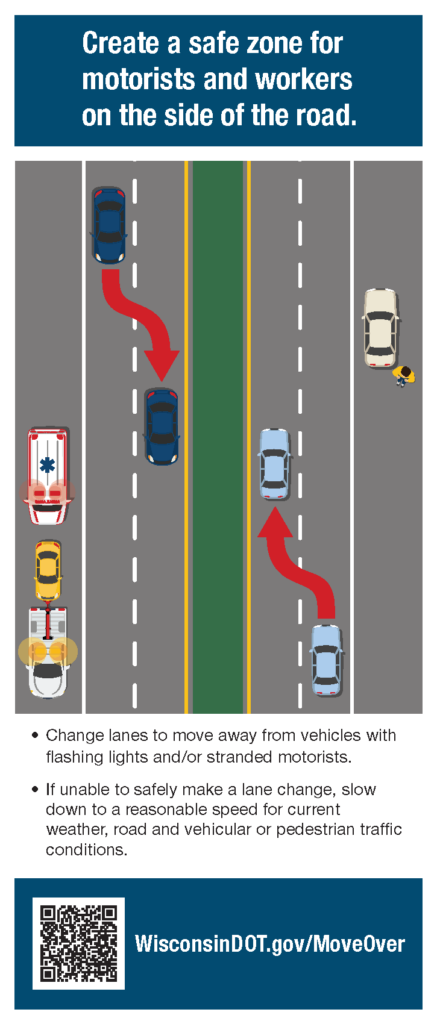
Wisconsin’s Move Over Law applies to roads with two or more lanes traveling in the same direction. Drivers must move out of the lane closest to stopped law enforcement vehicles, ambulances, fire trucks, tow trucks, utility vehicles and highway maintenance vehicles with their warning lights activated.
If moving over is not safe — or if the road has only one lane — drivers must slow down.
The State Patrol also addresses what drivers should do when a lane change is not available.
“It’s slowing below the speed limit to a speed that’s safe. And it doesn’t have to be a speed that’s like so low that it’s causing a traffic incident behind you. But it’s just a speed that’s much safer. So that it gives a little bit of a cushion just to give them a little bit extra protection,” Ballweg-Larsen says.
The law was enacted in 2001. A violation can result in a noncriminal moving violation and a fine of up to $300. If the violation causes a crash or injury, the penalties can be much more significant.
Troopers are also using traffic stops as opportunities to explain the law.
“A lot of times it might be just an educational lesson for when we stop motorists, and other times it might result in a citation,” Ballweg-Larsen says.
Protections now include some disabled vehicles
The law was expanded under 2025 Wisconsin Act 54.
The same protections now apply to disabled vehicles stopped along the road when:
- Hazard lights are activated.
- Emergency devices or flares are placed near the vehicle.
- One or more people are attending to the vehicle and are visible to motorists.
The Wisconsin State Patrol also reminds drivers to stay alert, put down their phones and scan the road ahead for stopped vehicles and traffic incidents.
Ballweg-Larsen sums up the message this way:
“When you see the flashing lights on the side of the road, cut them some slack and slow it down so that everyone can get home safe and sound,” she says.
Move Over Day is observed Saturday, October 17, but Wisconsin’s Move Over Law applies every time drivers encounter flashing lights or a stopped vehicle along the road.
For more information about the law, click here.