

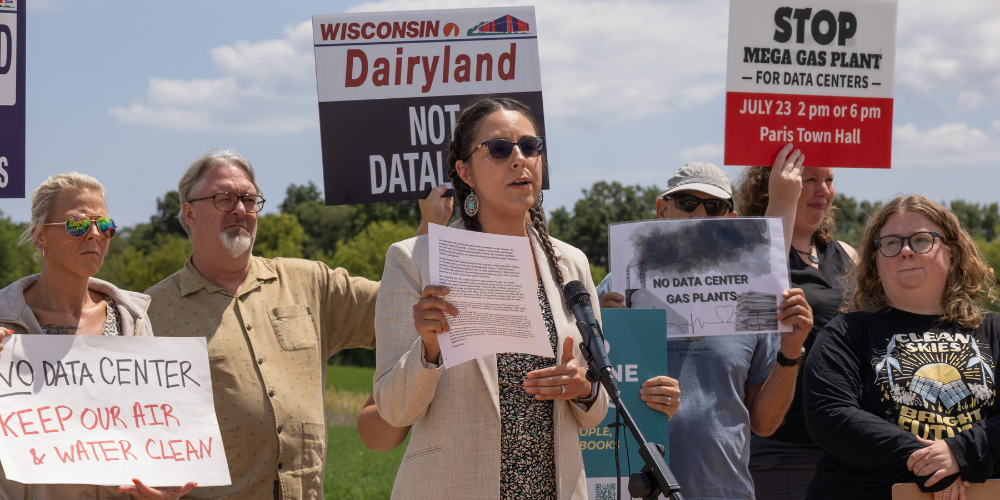
MADISON, Wis. — Public opposition is growing as state utility regulators weigh an energy proposal for two natural gas plants to power data centers in Southeast Wisconsin, including one in Kenosha County that would be the state’s second-largest gas plant.
The projects known as Foundry Ridge in the Town of Darien and Red Oak Ridge in the Town of Paris would serve as backup generators, as reports predict electricity demands in Wisconsin will rise rapidly due to hyperscale data center campuses.
Scientists find state regulatory loophole
Foundry Ridge and Red Oak Ridge are going through the application process through what some are calling a loophole in state regulations. Chicago-based Invenergy is applying to construct the gas plants, while We Energies is applying to then purchase the power for “substantial data center load additions.”
State law limits how the Public Service Commission of Wisconsin (PSC) can weigh public impacts when assessing applications from an independent company like Invenergy. The PSC can only consider the needs of the public in We Energies’ applications to purchase the power, and not in Invenergy’s application to build the plants.
“It restricts the power and voice of ratepayers and excludes opportunities for debating which type of power source is best,” Maria Fernanda Chavez, Senior Energy Analyst with Union of Concerned Scientists said.
Applications from Independent Power Producers have historically been used for clean energy proposals in Wisconsin as well, including some that were also paired with We Energies applications to purchase the power.
RELATED: We Energies data center rate plan gets approval, with major changes
Report indicates health harms to the public
Researchers predict the Foundry Ridge and Red Oak Ridge energy centers could cost Wisconsin millions of dollars and dozens of lives.
A University of Wisconsin–Madison study found that exposure to particulate matter emissions from the two plants alone could result in $1.38 billion in health harms nationwide over the plants’ 30-year lifetimes.
“The University of Wisconsin scientists project that just one air pollutant, PM 2.5. . . could take the lives of 118 U.S. citizens, 41 of whom are likely to be Wisconsinites,” UW Health Kids pediatrician Dr. Andrew Lewandowski said.
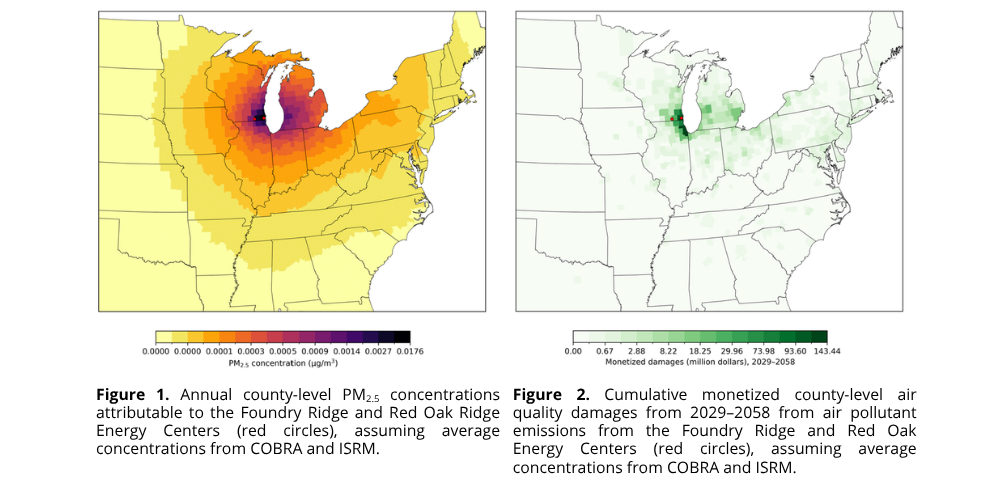
Red Oak Ridge would be the second largest of Wisconsin’s 29 existing natural gas power plants at 1,186 megawatts, and Foundry Ridge would be the twelfth largest at 324 megawatts.
“No community should continue to bear the burden of air pollution levels that harm public health, and Paris has already been a frontline community,” Molly Collins, Advocacy Director for Wisconsin and South Dakota at the American Lung Association said.
Residents oppose burden on rural communities
The feedback at public hearings for the energy centers has been overwhelmingly negative, with concerns over health impacts, water use, energy costs for ratepayers and industrial development in rural communities.
“These pollutants don’t stay inside a fence line,” said Charlie Shahbazian of Paris Township. “They drift in our fields, settle on our plants and get breathed in by our kids and neighbors.”
Red Oak Ridge could use 240,000 gallons of water from Lake Michigan per day when running at full capacity, which would require special approval under the Great Lakes Compact. Foundry Ridge could use over 55,000 gallons of groundwater at full capacity. Although many data center developers in Southeast Wisconsin have touted how closed-loop cooling systems will save on water use, others point to data centers’ electricity needs that will increase water use.
“It’s less talked about how much water electricity itself uses when it comes from fossil fuels,” Cassie Steiner, Senior Campaign Coordinator with Sierra Club Wisconsin said. “Combined, data centers and fossil fuels are really thirsty.”
The energy centers do have some support from residents concerned about Wisconsin keeping up with electricity demand, especially members of local unions.
“It’s very important that we look at the big picture of it’s not just data centers,” said John Arends of Racine. “Kenosha is building and Kenosha is open for business.”
Other community concerns include the Red Oak Ridge’s proximity to an Amazon facility, which residents worry could disproportionately harm low-income workers with air pollution. The Wisconsin Department of Transportation has also raised proximity concerns — that steam from the plant could create an icing safety hazard on a major I-94 corridor.
Invenergy hopes to begin construction on both plants by the fall, with Foundry Ridge operational by mid-2028 and Red Oak Ridge operational by June 2030. The PSC is in the process of reviewing testimony and public comments, with a final decision expected in the coming months.
WTMJ reached out to Invenergy for a comment but did not hear back.
RELATED: State regulators deliver massive setback to Port Washington data center power lines