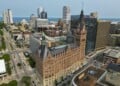


MILWAUKEE — Milwaukee’s finances are expected to face increasing pressure over the next five years, according to a new report released as Mayor Cavalier Johnson prepares to unveil his proposed 2027 budget.
The city’s first Five-Year Financial Forecast, prepared by Comptroller Bill Christianson’s office, projects a $52.5 million budget gap in 2027, growing to approximately $104.5 million by 2031. The report projects revenues will increase from about $1.18 billion to $1.3 billion over that period, while expenditures climb from $1.23 billion to more than $1.4 billion.

Christianson told WTMJ the forecast is intended to get city leaders thinking beyond the next annual budget.
“The decisions that are made as part of the 2027 budget could improve the situation for subsequent budgets or could make the situation worse,” said Christianson.
Sales tax bought Milwaukee time
The forecast comes roughly three years after Wisconsin Act 12 allowed Milwaukee to implement a 2% city sales tax.
That additional revenue helped the city avoid much deeper budget cuts, but Christianson said it did not provide a permanent solution.
“I think it’s accurate to say that Act 12 bought the city additional time, but it didn’t solve the structural budget challenges that the city is facing,” he said.
Act 12 also placed restrictions on how Milwaukee can use its sales-tax revenue and requires the city to increase police and fire staffing in the coming years. The forecast assumes Milwaukee adds 10 police positions and five fire positions annually to meet those requirements.
Christianson said rising personnel, health care, pension and debt-service costs are among the major expenses contributing to the city’s financial pressures.
Reserves aren’t a permanent solution
Milwaukee enters the period with relatively healthy reserves. Its three primary reserve funds totaled approximately $281 million at the end of 2025.
However, the comptroller’s report warns that using reserves year after year won’t solve the underlying problem. A scenario in the report found that attempting to cover the projected deficits entirely with those reserves would exhaust them during 2030.
Christianson expects city departments outside of police and fire to face pressure to find savings as the 2027 budget takes shape.
“I think other departments are going to be asked to pull back on things that are discretionary, on things that are not mandated services,” Christianson told WTMJ.
But Christianson said spending reductions and efficiencies alone are unlikely to eliminate the projected gaps. His report concludes that Milwaukee will likely need additional cooperation from state government to find a long-term solution.
Mayor Johnson will present his proposed 2027 budget to the Milwaukee Common Council on September 22.