
WEST ALLIS, Wis. — Spend a few minutes around the cattle barns at the Wisconsin State Fair and you start to notice the little things.
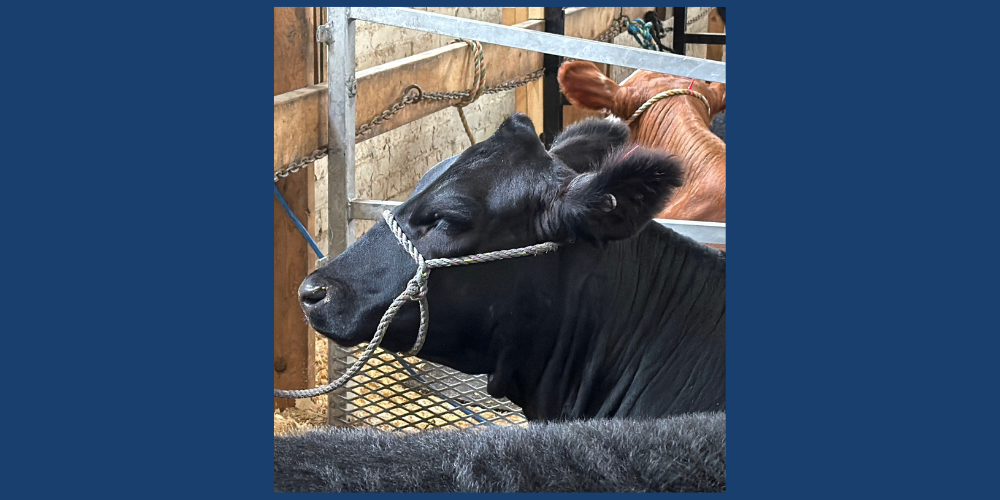
Some cows are lying down. Some are chewing steadily. Some are watching people move through the aisle.
Merck Animal Health Veterinarian Glaucio Lopes says those behaviors can offer clues about how an animal is doing.
“If you see that animal that is comfortable, [it] is an animal that is laying down and chewing their cud,” Lopes says. “If you see that movement in their mouth going back and forth, it means that they are ruminating.”
For dairy cattle, rumination is part of the digestive process that helps turn feed into energy and milk. Lopes says a cow lying calmly and chewing her cud is generally showing signs that she is comfortable.
There are also a few things fair goers should keep in mind before walking up to one of the animals.
Lopes says because they are prey animals, cattle see differently than people because their eyes are positioned more toward the sides of their heads.
“Always approach from the sides,” Lopes says. “This way you give them the chance to just turn a little bit their head around and see you.”
He also recommends checking with the person caring for the animal before trying to pet it.
But farmers are not relying only on what they can see.
Some cattle wear monitoring devices on their necks or ears that track activity and rumination.
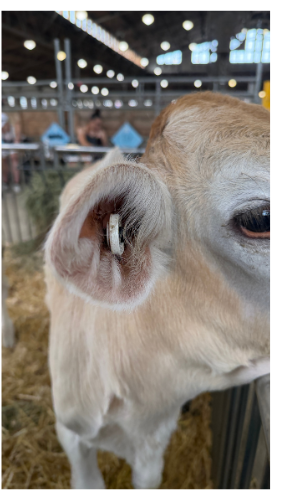
“Just like we do have our smartwatches and Fitbits that track our activity, these devices also track what is relevant for the animals,” Lopes says.
Heather Roy of Roy Farms in Fort Atkinson uses that kind of technology with her Hereford cattle.
Roy says the monitoring system is especially useful during times of the year when her family is busy elsewhere on the farm.
“We find it most valuable in the fall because we have a crop farm as well, so we’re not home as much,” Roy says. “It’s real easy to tell, well, this one isn’t moving as much, so we need to take a look at her or go back home and check on her.”
The system also helps Roy Farms with breeding.
The farm does not keep a bull with the herd and instead uses artificial insemination. Roy says monitoring activity helps identify when a cow is in heat, including at times when those signs may be harder to catch.
“It helps us catch those tough heats, especially in these hot summer months when we can’t tell heat,” Roy says. “They’ll tell it during the night, and so we’ll tell their activity, how much they’re walking, and be able to get a more accurate heat so we can breed them on time.”
Lopes says changes in activity can sometimes show up before a problem becomes obvious.
He points to research comparing monitoring data with when workers on a farm eventually identified illness in an animal.
“Animals that were later diagnosed with a disease showed that behavior change sometimes three days in advance,” Lopes says.
He is careful to point out that the technology is not diagnosing an illness.
“We can definitely find animals that are having a bad day early on,” Lopes says. “But remember that that’s not a diagnosis. That is just showing animals they’re not having a good day.”
And despite the growing amount of technology available to farmers, Lopes says it is not replacing the people who know the animals.
“It’s not replacing you at all,” Lopes says. “It’s actually helping you to really focus on the animals that need help.”
So for visitors making their way through the cattle barns at State Fair, the ribbons and show ring are only part of what is happening.
A cow lying quietly, chewing her cud or wearing a monitoring collar may be giving her caretaker useful information all day long.