










MILWAUKEE, Wis. – It isn’t often a Milwaukee alderman informs members of the media to “have your popcorn ready” for a budget hearing.
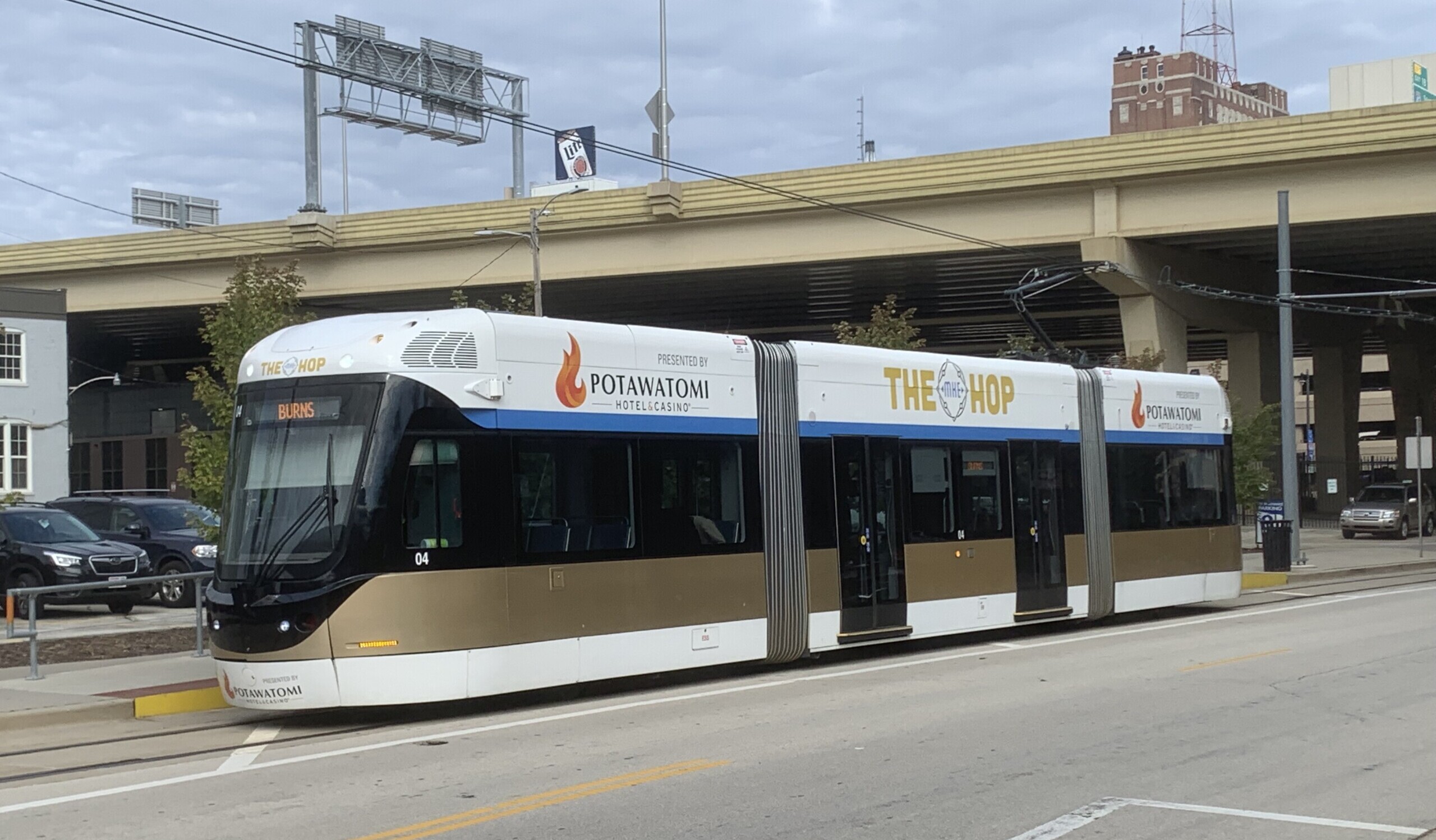
But that was Scott Spiker’s message on Wisconsin’s Afternoon News this week ahead of a Personnel and Finance Committee meeting October 16, all following his recent push to remove funding for Milwaukee’s streetcar The Hop from the proposed 2026 City budget.
The meeting itself lacked the metaphorical fireworks the Alderman suggested could come about, but did include a long back-and-forth between members of the committee and leaders of the Department of Public Works.
Among several items related to DPW’s portion of the proposed budget authored by Mayor Cavalier Johnson, the Milwaukee streetcar generated the most pre-meeting buzz by both Alderman Spiker and others heading in.
“Our needs are growing, and our status quo is slowly killing us” said Spiker to the room.
At issue for the alderman is the expected operating gap for the streetcar next year. Under the proposed 2026 budget, the City estimates it will cost $6,943,584 to operate the streetcar. The system is expected to generate $2,692,093 in revenue between streetcar sponsorships, advertising and operating assistance, according to data presented by DPW October 16. That number is about a million dollars more than forecasted in Mayor Johnson’s proposal.
For 2025, the city budgeted $5,723,109 in total for streetcar operations, compared to the rougly $1.7 million it was projected to generate in revenue. As previously reported, that amount has dropped considerably compared to $4.5 million in revenue raised in 2024, a total which included federal American Rescue Plan Act (ARPA) funds for the system.
DPW Commissioner Jerrel Kruschke admitted options for growing the streetcar system beyond its current 2.1 mile network are limited given the current makeup of the Wisconsin Legislature and the federal government. As part of 2023’s Wisconsin Act 12, the City of Milwaukee cannot use “moneys raised by levying taxes for developing, operating, or maintaining” the streetcar.
“You’re never going to win over folks that are not a fan of public transportation, period.” said Kruschke.
Krushcke also noted that if the City were to remove the streetcar, as Alderman Spiker has suggested could be done in place of increasing a wheel tax, the city would have to cut a large check to the federal government because of so-called “callbacks” agreed upon when the streetcar began operations in 2018.
The callback is a legal requirement to keep The Hop’s vehicles in operation for at least 25 years, and the infrastructure such as rails and switches for 40 years. If operations ended before those minimum windows, Kruschke says the city could have to pay an estimated $48 million to the federal government.
“So if you decided, ‘I don’t want to run it today’, that’s a $48 million check we’d have cut tomorrow,” said Kruschke.
Other members of the committee took issue with Spiker’s stance on the streetcar, particularly Vice Chair Peter Burgelis.
“I understand that some people’s focus is only on the streetcar’s operating cost. But that misses the bigger picture,” Burgelis said reading from a pre-prepared statement co-authored with Alderman Bob Bauman, a long-time supporter of the system.
The two noted that according to the City Assessor’s 2025 City of Milwaukee Revaluation Report, downtown Milwaukee’s core districts near where the streetcar operates experienced assessed value increases of 16.46 percent.
“These numbers are not a coincidence,” said Bauman. “They are the result of deliberate public investment, including the streetcar, which has made downtown more connected, walkable, and attractive to employers, residents, and visitors alike. I often say in response to the remark that ‘the streetcar does not pay for itself’ that it has paid for itself many times over in terms of economic development and increased tax base.
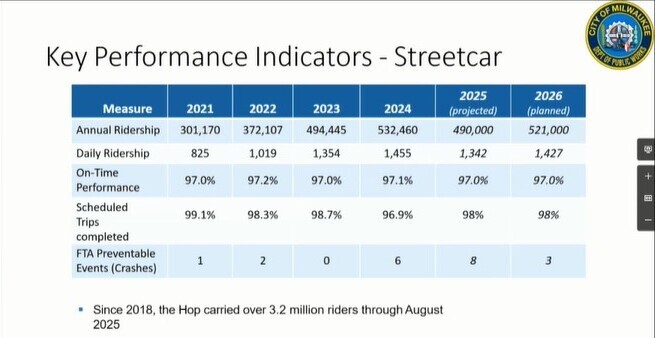
In terms of ridership aboard the streetcar, DPW highlighted year-to-year increases through 2024 dating back to the start of the pandemic despite a projected dip in riders for 2025. The Hop reported on its ridership data page that 45,237 people rode the Hop in September of 2025. That equates to an average of 1,508 riders per day and is up about 1,000 riders from the same month in 2024.
Also present for the streetcar discussion was the recently hired system manager James Vineau. The former senior director of transit operations and maintenance for overseas-based RAPT Dev kept his comments limited, mostly painting a general picture of the current state of the system including issues with maintenance and crashes involving drivers on the road.
RELATED: An exclusive one-on-one with Milwaukee’s new streetcar system manager
Some on the committee argued keeping the streetcar was important for maintaining a forward-thinking attitude towards the future.
“The cities of the future are taking a risk. They’re doubling down. They’re investing,” said committee chair Marina Dimitrijevic.
The scheduled Budget Amendment Day is October 31, with the full Common Council poised to vote on adoption of the budget November 7.
TOP STORIES FROM THE WTMJ NEWSROOM:
- Brewers fan loses job and ballpark privileges after a heated exchange during NLCS Game 2
- Mitchell International Airport blocks government video from playing
- Some Wisconsin veterans relocated after 2 housing sites close
- New Wisconsin law lets police impound vehicles in reckless driving cases, regardless of ownership
- Lawmakers pass bill that would ban cell phones in Wisconsin classrooms