







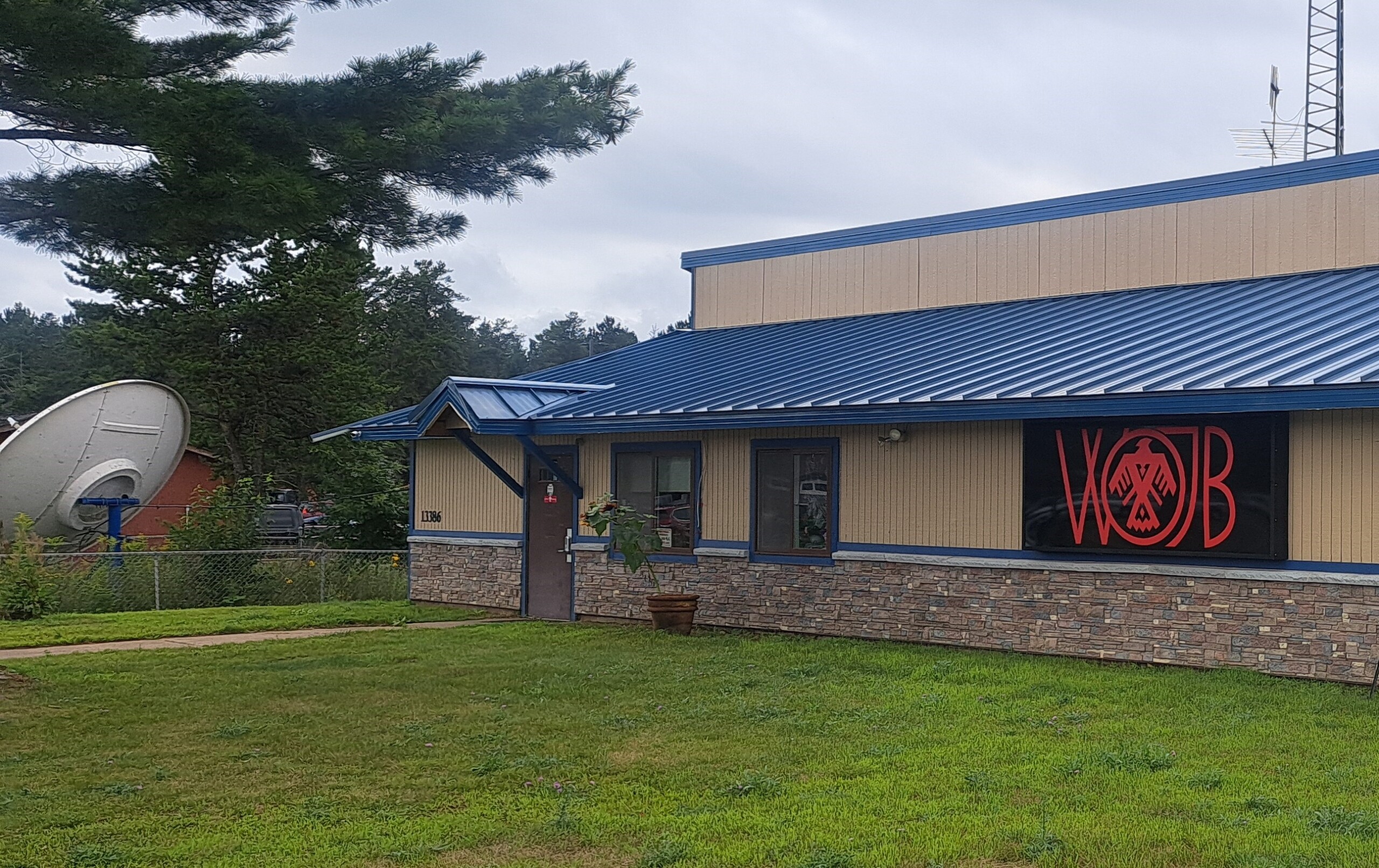
Small market radio is often times the sole source of news and information covering wide reaching rural areas across the United States. Breaking it down even further, there are very few stations throughout the country that not only cover a wide geographic region, but also primarily serve the news needs of the Native American population.
In northwestern Wisconsin, the nation’s first Native-run station east of the Mississippi River checks both of those boxes. And it’s currently facing an uncertain future.
WOJB first went over the air in 1982. The station’s facility southeast of Hayward, Wisconsin sits on the north end of the Lac Courte Oreilles Ojibwe Reservation. Its roughly 100-mile coverage radius also includes the St. Croix Ojibwe Reservations scattered across Barron, Burnett, Polk and Washburn Counties, along with the Bad River and Red Cliff Reservations to the north and the Lac du Flambeau to the east.
The station’s inception stems from a land dispute in the early 1980s over the ability of the Native population to spear walleye at night during spawning season off the reservation. The conflict included protests from area businesses, many of which contained overtly racist messaging, and the period is still referred to as the “spearfishing wars” in the region.
In 1987, U.S. District Court judge Barbara Crabb ruled that six Ojibwe tribal governments had the right under these treaties for hunting and fishing throughout their former territory.
The dispute mirrored similar incidents between Native and white populations in northern Wisconsin over the years, though never escalated to the kind of situation seen about a decade earlier during the standoff at the Alexian Brothers Novitiate in Gresham, Wisconsin. During that period, WOJB first began broadcasting while allowing both sides of the conversation to express their opinions.
READ MORE: “Deed or Death”: The story of the 1975 Alexian Brothers Novitiate standoff
Nowadays, the station primarly shares news content, music, and Native community gathering information over the air. But the station’s general manager Karl Habeck tells me their news content caters to more than just the Native population of the area.
“We look at ourselves as almost a liaison between the Native community here and the surrounding area, which is mostly Anglo, and our seasonal people that come here mostly from Minnesota,” Habeck tells WTMJ.
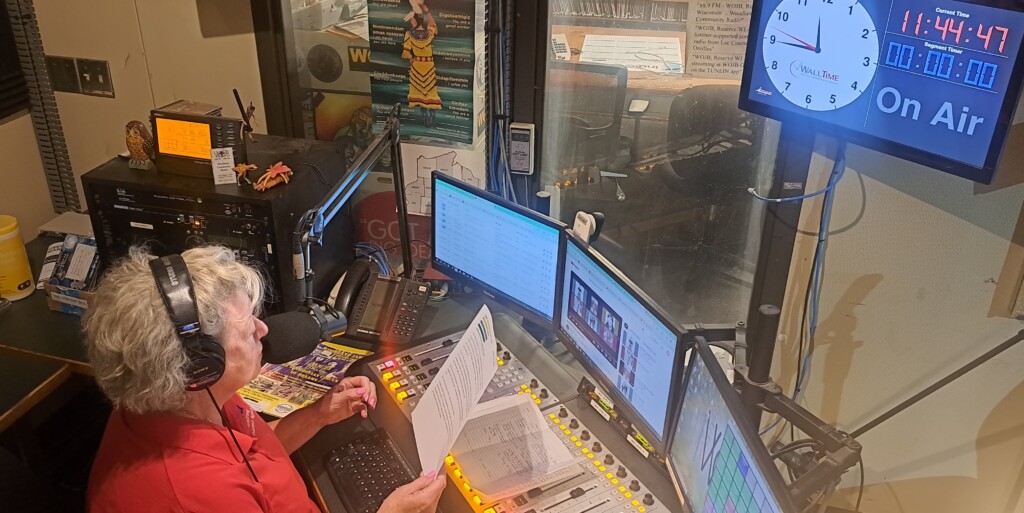
Per its mission statement, WOJB “aims to inform citizens of significant issues facing society and also convey the cultural past of the region before and after European settlement.” It’s also the lone public radio station in Wisconsin currently listed as “at risk” in recent analysis by the advisory firm Public Media Company following news earlier this year that the Coporation for Public Broadcasting (CPB) would be dissolving by September 30.
READ MORE: Corporation for Public Broadcasting to cease opeartions
Habeck says that timing is critical, since the start of October marks the end of the fiscal year for many public radio stations. “At that time of the year they’re going to be running out of money, and you’re going to be seeing stations going dark probably by the end of October,” says Habeck.
Despite this, Habeck expresses confidence WOJB will be able to weather the storm; the station has set aside money to get them through the immediate aftermath of CPB’s dissolvement. But they will still need to be able to replace roughly $230,000 the station currently receives through the organization. And any deals reached by government officials may not come quickly enough.
“You and I know how government operates. [These] things take time. And a lot of these stations don’t have time. That’s going to be a determining factor if they stay on the air or not,” says Habeck.