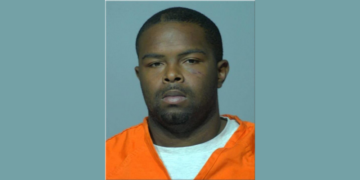

MILWAUKEE, Wis. — Former Wisconsin lieutenant governor and gubernatorial candidate Mandela Barnes alleges the Milwaukee Journal Sentinel published a pair of stories about his consensual sex life that caused harm to his reputation in a newly filed defamation lawsuit.
Among the claims in the case filed November 9, Barnes alleges a female reporter at the paper with whom he had previously had a sexual relationship was involved in the original reporting on the two stories published July 30, the same day Barnes suspended his campaign ahead of the Democratic primary for governor the following month.
The suit alleges the Journal Sentinel acknowledged that the relationship presented a conflict, removed the unnamed reporter from the matter, and represented that other reporters would re–report portions of the story.
The reporter at the center of the allegations is not named in the complaint obtained by WTMJ, rather they are at points identified as the “Conflicted Reporter”.
“The Conflicted Reporter had previously maintained an intermittent sexual relationship with Barnes beginning in approximately 2018 and lasting several years,” stated the complaint.
Reporters Mary Spicuzza and Molly Beck were ultimately credited with both stories.
The first article titled “Sources detail concerns about Mandela Barnes’ behavior toward women” claimed officials with the Democratic Party of Wisconsin hired an outside law firm in 2025 “to review allegations involving young adult women against one of the party’s stars, Mandela Barnes”, citing “a person familiar with the matter”. The second article, which focused on Barnes dropping out of the gubernatorial race, said the decision “came amid reporting by the Milwaukee Journal Sentinel into allegations that Barnes was taking advantage of his role in the party to have sexual encounters with young adult women”.
“The final articles did not disclose the conflict, the Conflicted Reporter’s participation, her removal, or the last-minute re-reporting process,” the complaint states.
The complaint adds the Journal Sentinel was asked by Barnes’ legal team in a letter October 28 to retract certain statements and make other corrections, and that counsel for the paper advised November 4 that no changes would be made.
“The complaint identifies specific statements and implications that Mr. Barnes alleges are materially false, including the reporting about a supposed party investigation,” said Barnes’ counsel Michael J. Cerjak. “It also details the information provided to the Journal Sentinel before publication and the newspaper’s handling of a disclosed reporting conflict. Those allegations are central to the claims we are asking the court to resolve.”
I understand that seeking public office brings scrutiny, and I respect the essential role of a free press,” Barnes said in a statement November 10. “Accuracy and fairness matter deeply when reporting affects a person’s reputation, family, and future. I dispute the reporting identified in this complaint and believe it created a materially false picture of me and my conduct. I asked the Journal Sentinel to correct it, and the newspaper declined. I am bringing this case so the disputed facts can be examined through the legal process.”
Barnes is seeking compensatory and punitive damages and has also asked for a jury trial.
According to the Wisconsin Law Library, the three basic elements of a defamatory communication are:
- The statement is false.
- The statement is communicated by speech, by conduct, or in writing to a person other than the person defamed.
- The communication is unprivileged and tends to harm one’s reputation so as to lower the person in the estimation of the community or to deter third persons from associating or dealing with the person.
As a public figure, Barnes and his legal team would also have to prove that the Journal Sentinel had actual malice in the story, meaning the paper either knew a statement was false or had serious doubts about its accuracy.
The Journal Sentinel is listed as the only defendant in the complaint. Defamation is a tort claim, defined as an act or omission that gives rise to injury or harm to another and amounts to a civil wrong for which courts impose liability, meaning the paper has 45 days excluding the day of service to file a response to the lawsuit.
Greg Borowski, the paper’s editor, referred requests for comment to the public relations team for the Journal Sentinel’s parent company Gannett Co., Inc. A request for comment to that department has not yet been responded to.
TOP STORIES FROM THE WTMJ NEWSROOM:
- Wisconsin Governor-elect David Crowley lays out his administration transition plan
- Wisconsin online sports betting faces delay as lawsuit heads to court next spring
- Charges filed in the death of a Milwaukee Public Schools’ special education teacher
- Stars and Stripes Honor Flight expands eligibility to more Wisconsin veterans
- Audit of Milwaukee sewage operations offers mixed findings